

Common problems and solutions of composite membrane
2022-12-05Common problems and solutions of composite membrane:
1、 The following three treatment methods are tested for poor adhesion due to insufficient oxidation of the resin surface:
1. Add air gap interval properly;
2. Reduce the winding speed of the extruded composite film;
3. Equipment ozone generator.
The adhesion force is generally related to the surface oxidation degree (according to the resin temperature, air volume and residence time) and viscosity (according to the temperature and resin type).
Generally, when extruding at the same temperature and at the same extrusion rate, decreasing the film thickness or advancing the winding rate will reduce the adhesion. Even at the same set temperature, the forward extrusion rate may also reduce the resin temperature and adhesion (but the degree and tendency may vary according to the characteristics of the extruder and the type of heating equipment). At the same processing temperature, the degree of oxidation will also vary with the type of extrusion coating. In general, the higher the melt index, the lower the density, the more oxidation tendency.
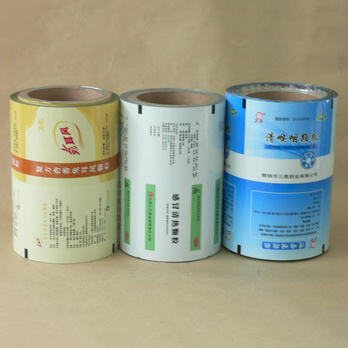
2、 The temperature when the resin is pressed against the substrate is too low. The following three treatment methods are tested:
1. Advance the resin temperature to fully plasticize and mix the resin. The higher the heating temperature of the compression section and homogenization section, the higher the degree of resin plasticization and mixing, but the higher the temperature, the easier the resin differentiation. The heating temperature shall be set according to the resin type and its melt index.
2. Do not make the orientation of the die mouth too close to the side of the cooling roller to avoid the resin from being too cooled before pressing onto the substrate.
3. Preheat the substrate through the oven.
Related articles
-
China initially began to introduce equipment, technology and raw materials in the 1980s. In the 1990s, China has been able to manufacture single-color…
-
Aluminized composite film is a bright metallic film formed by evaporating high-purity aluminum wire into gaseous state at high temperature (1100~1200 …
-
The protective agent layer of PTP aluminum foil is a dense cross-linked resin layer formed by high temperature curing. The solvent wiping method commo…
-
What are the performance characteristics of composite membrane? Excellent mechanical function: tensile strength, elastic modulus, elongation, etc. tha…